




As cities grow and infrastructure projects expand, the challenge of maintaining safe and organized roads intensifies. Traffic barriers and other safety solutions are essential for guiding vehicles and pedestrians, especially in situations requiring crowd management or work zone safety. Choosing the right combination of barricades, equipment, and training can reduce risks, improve flow, and make streets safer for all users.
The core functions of traffic management barriers
Traffic management barriers serve purposes far beyond simply stopping vehicles. Their strategic placement ensures both access control and public protection across varied environments, from highways to parking lots. Understanding these fundamental roles highlights their significance within a comprehensive traffic control strategy.
Also read : What Are the Key Factors That Determine Success for UK Businesses?
With vehicle numbers increasing, proper barrier use is crucial around construction sites, temporary events, and busy intersections. Not every barrier fits every situation—differences in design and material lead to distinct uses and results.
How do barriers support road safety?
Barricades act as physical shields, absorbing impacts and preventing minor incidents from escalating into serious hazards. Well-placed barriers reduce the risk of vehicles veering off course near lane closures or during major events. In addition, they define clear paths, minimizing confusion and risky maneuvers by drivers unfamiliar with new layouts.
In parallel : What Are the Key Differences Between Entrepreneurship and Small Business Ownership?
Barriers also separate opposing streams of traffic or protect workers operating close to live lanes. By providing visible and tangible guidance, they form the backbone of any robust road safety plan.
Types of commonly used traffic barriers
Decision-makers select among several types of traffic barriers based on environment, likelihood of collisions, and visibility requirements. Concrete barriers line main highways and medians, offering strong resistance in high-risk areas. Water-filled barricades provide flexibility and convenience for short-term projects or rapidly changing conditions.
Lightweight plastic barriers or metal fencing are often chosen for crowd management, parking lot safety, or low-speed settings. Each type addresses unique needs while supporting effective traffic control and public safety.
- 🧱 Concrete barriers: strong and ideal for highways
- 💧 Water-filled barricades: portable and easy to deploy
- ⚠️ Plastic or metal fencing: suited for events and pedestrian zones
- 🚧 Temporary signage: guides traffic through work zones
Integrating safety solutions for work zone and parking lot environments
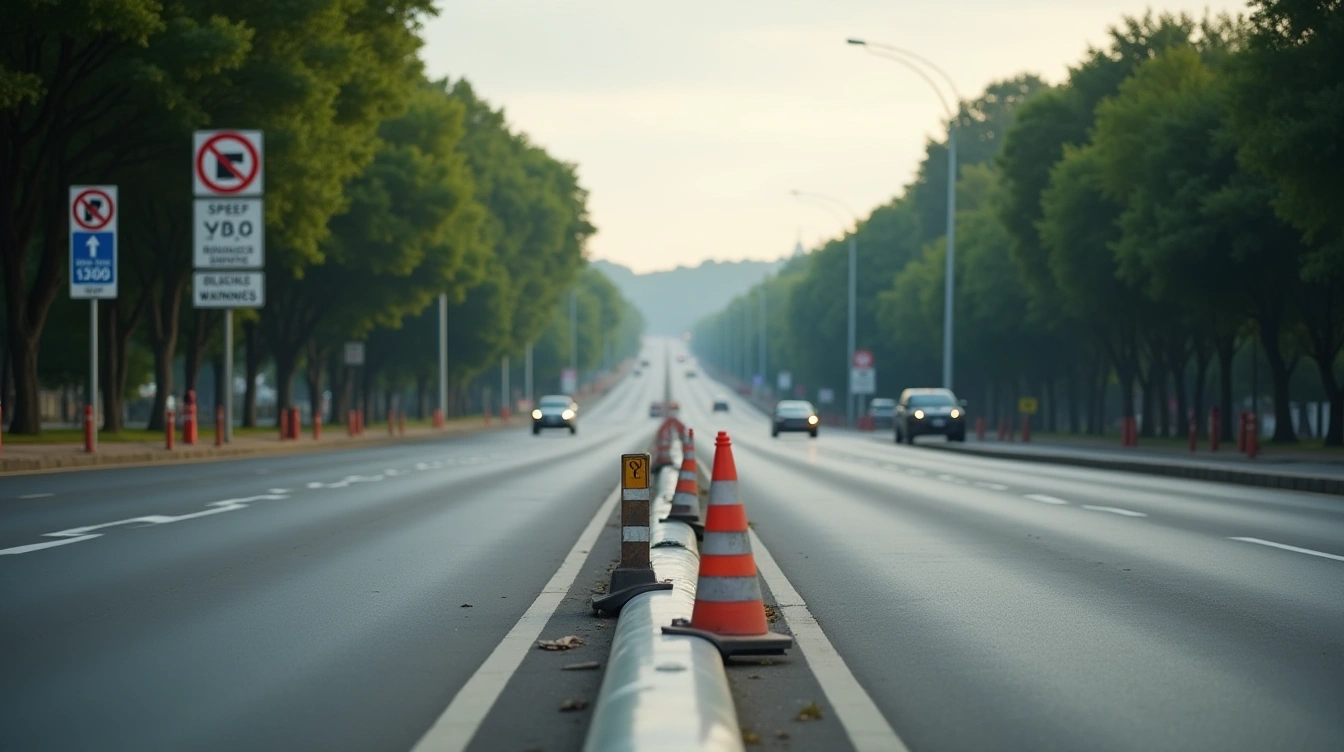
Temporary disruptions—such as repairs, maintenance, and event setups—bring unique dangers that require focused crowd management and specialized safety solutions. Construction areas need more than visible barricades; thorough planning and updated practices are critical for reducing accidents. For large gatherings or high-attendance events, advanced operations often incorporate public safety solutions for maximum effectiveness.
Work zones demand coordinated safety measures for maximum impact. Workers face moving vehicles and frequent changes, which call for targeted solutions and rapid response capabilities.
What steps improve work zone safety?
Multiple layers of security help safeguard both workers and drivers. Deploying advance warnings and clear signs prepares motorists for changes ahead. Brightly colored barriers, cones, and illuminated signals reinforce visual cues, slowing traffic and directing it safely through altered routes.
Flagger training develops staff skilled in communication and situational awareness. Flagger teams equipped with vests, radios, and paddles can efficiently stop or channel traffic when heavy machinery enters or exits a site. Combining reliable safety equipment with human oversight reduces uncertainty and accident rates.
How does parking lot safety differ from roadway management?
While open roads involve higher speeds and heavier vehicles, parking lots feature frequent stops, reversing, and interactions between cars and pedestrians. Barricades in these spaces manage entry points, divide lanes, and deter theft, while reflective tape and height restrictors alert users to potential hazards.
Routine inspections and clearly marked walkways enhance long-term safety and help prevent liability claims. At larger venues or stadiums, additional barriers—sometimes electronically controlled—help maintain order and direct crowds during peak times.
| 🔎 Feature | 🛣️ Roadway application | 🏢 Parking lot application |
|---|---|---|
| Barriers needed | Concrete, water-filled, heavy-duty | Plastic, light metal, flexible poles |
| Key hazards | High speed, lane changes, construction | Blind spots, pedestrian conflict, tight turns |
| Optimal safety solutions | Flagger training, electronic signals, illuminated signage | Reflective paint, physical dividers, enforcement cameras |
Best practices for selecting and using safety equipment
The effectiveness of safety equipment relies not only on selection but also on regular maintenance and correct setup. Investing in durable, modern materials saves lives and reduces costs over time. Ongoing evaluations allow teams to spot worn parts, faded markings, or misplaced barricades before problems arise.
Practicality is key. Quick deployment and easy reconfiguration are crucial for successful traffic control during sudden weather changes, emergency detours, or shifting crowds at large gatherings. High-quality equipment performs reliably under pressure, giving organizers confidence and reinforcing public trust.
Essential elements in a comprehensive safety equipment kit
Each environment requires a tailored mix of protective gear. A complete kit may include:
- 🔦 High-visibility safety vests for flaggers and crew
- 📻 Two-way radios for instant coordination
- 🚦 Battery-powered warning lights and flares
- ✅ Clearly marked cones and movable barricades
- 🪪 Identification badges and advanced signage for restricted areas
Frequent drills and scenario planning build team confidence, helping crews handle real-life complications effectively. Management should encourage prompt feedback after each deployment to promote ongoing improvement in both strategy and equipment choices.
Tailoring safety solutions for effective crowd management
Large-scale events often require creative arrangements, such as staggered entry points or barrier “mazes” that slow movement without causing discomfort. The best crowd management combines physical deterrents with visible staff, loudspeakers, and clear rules communicated in advance.
Unexpected situations, like weather-related evacuations or unruly attendees, put these plans to the test. Using adaptive barricades and mobile posts allows teams to redirect crowds quickly while maintaining order and minimizing injury risks.
Questions about traffic barriers and safety planning
What are the key factors when choosing traffic barriers?
Selecting the right traffic barrier depends on expected collision force, duration of use, and visibility needs. Consider whether the location faces heavy trucks, sharp curves, or dense pedestrian activity. Material durability, transport ease, and compliance with standards are also important.
- 📏 Height and length requirements
- 🔄 Ability to withstand weather and repeated use
- 🟨 Day and night visibility (reflectors, lighting)
Why is flagger training essential in work zones?
Flagger training gives personnel the expertise for precise signaling and fast decision-making. These trained individuals become the main point of contact between motorists and road crews, reducing confusion during complex detours or emergencies.
- 👷♂️ Improved alertness under pressure
- 🗣 Clear instructions to prevent misunderstandings
- ⏱ Quicker response to unexpected hazards
How do barricades help with crowd management?
Barricades guide the flow of people in crowded spaces. They create defined pathways, block off restricted areas, and lower the risk of stampedes or disorder during large gatherings.
- 🚶 Maintains steady movement toward exits
- 🫂 Keeps groups separated for safety
- 🎤 Allows organizers to enforce rules effectively
Which types of safety equipment are most useful in a parking lot?
Parking lot safety benefits most from highly visible tools that guide drivers and protect pedestrians. Key items include bollards, painted markers, portable posts, and designated crosswalks.
- 🚥 Reflective paint for better nighttime navigation
- 🚩 Flexible pole barriers to protect walkways
- 🙋 Emergency phones or help points for quick assistance
| 🔑 Equipment | 😊 Safety benefit |
|---|---|
| Reflective tape | Reduces fender-benders |
| Metal bollards | Protects building entries |
| Marked zones | Organizes traffic |